Radio Speakers Kinda Meh

Disclaimer: Links on this page pointing to Amazon, eBay and other sites may include affiliate code. If you click them and make a purchase, we may earn a small commission.

CheddarGau

Full Access Member
Joined
Oct 10, 2023
Messages
385
Reaction score
423
Location
Lower Mainland BC
I find myself needing to turn up my volume more and more, this is due to a few factors, such as noisy tires, wind noise, etc. Speakers are stockish. I know for sure the RF speaker has been replaced, screw fellow out and I riveted it in place. It has crackled on and off over the last three years. Long story short has anyone had good success replacing the stock ish speakers with 2 or 3 way that gave a good boost in clarity, so I don't have to crank the volume up so high...... or if nothing changes, then at least a nice boost in sound quality.

It's mainly the wife that complains when she gets in the car and it's still load from my previous drive. I would be replacing them all so as to have good sound quality. There is already an aftermarket deck in there, I know it's brand name, but I never committed it to memory because while it does BT and AUX it's over all pretty average. Price can be high or lower, but mainly want the clarity. I'm not allowed to sell the Jeep since my autistic son loves it so much..... I even had to pass on a 2013 wrangler that I could have got from work for a stealo_O Anyway let me know your thoughts.
 

seafish

Full Access Member
Joined
Jan 10, 2024
Messages
583
Reaction score
757
The answer really depends on how far down you want to go down the SQ (sound quality) rabbit hole.

That said, unless the speakers are physically failing, volume level has more to do with amplification then with speaker choice, although obviously amp power and speaker ratings must be safely matched.

The easiest way to decide and then upgrade would be to call Crutchfield, or visit their website, and give them your vehicle year, make and model, peruse the offerings that will fit your vehicle with sero modifications.

If you want the full Alice in Wonderland experience, then go visit diyma.com … the members there are well versed in leading you down the rabbit hole to think about buying all sorts of equipment that you might not think you need until you read the forum and discover the elusive SQ that you didnt realize you were chasing simply by asking about new speakers. (full disclosure — I belong to DIYMA)


Another point to consider is whether or not your Jeep has an "upgraded" sound system and exactly WHERE the amps are located in that vehicle… again, Crutchfield tech support is really good, friendly but without being pushy and can get you accurate answers to your questions with minimal BS…you can choose what you want based on quality or pricing… keep an eye out for their closeouts or open box returns for even better deals.
 
Last edited:

seafish

Full Access Member
Joined
Jan 10, 2024
Messages
583
Reaction score
757
Another thing to consider is using appropriate quality sound deadening materials to quiet down the wind, tire and road noise inside the cabin…this alone makes for a better listening environment, though doing it right it is NOT a simple process of slapping Dynamat inside all your doors.
 

klc

“It flies like a truck.”
KJ Supporting Member
Joined
Jan 14, 2022
Messages
760
Reaction score
1,107
Location
PNW
I find myself needing to turn up my volume more and more, this is due to a few factors, such as noisy tires, wind noise, etc. Speakers are stockish. I know for sure the RF speaker has been replaced, screw fellow out and I riveted it in place. It has crackled on and off over the last three years. Long story short has anyone had good success replacing the stock ish speakers with 2 or 3 way that gave a good boost in clarity, so I don't have to crank the volume up so high...... or if nothing changes, then at least a nice boost in sound quality.

It's mainly the wife that complains when she gets in the car and it's still load from my previous drive. I would be replacing them all so as to have good sound quality. There is already an aftermarket deck in there, I know it's brand name, but I never committed it to memory because while it does BT and AUX it's over all pretty average. Price can be high or lower, but mainly want the clarity. I'm not allowed to sell the Jeep since my autistic son loves it so much..... I even had to pass on a 2013 wrangler that I could have got from work for a stealo_O Anyway let me know your thoughts.
I replaced mine with JBL’s. Coaxial in the back, component in the front.
 

CheddarGau

Full Access Member
Joined
Oct 10, 2023
Messages
385
Reaction score
423
Location
Lower Mainland BC
The answer really depends on how far down you want to go down the SQ (sound quality) rabbit hole.

That said, unless the speakers are physically failing, volume level has more to do with amplification then with speaker choice, although obviously amp power and speaker ratings must be safely matched.

The easiest way to decide and then upgrade would be to call Crutchfield, or visit their website, and give them your vehicle year, make and model, peruse the offerings that will fit your vehicle with sero modifications.

If you want the full Alice in Wonderland experience, then go visit diyma.com … the members there are well versed in leading you down the rabbit hole to think about buying all sorts of equipment that you might not think you need until you read the forum and discover the elusive SQ that you didnt realize you were chasing simply by asking about new speakers. (full disclosure — I belong to DIYMA)
Good info I will have to look into it. I'm not sure I have the time of the will power to dedicate that much time to audio..... there is a reason I never got into it in the first place... I'm more the buy good headphones and use the presets I like kinda guy..... At least when it comes to gaming. The brief amount of research I did last night, has lead me to consider sound proofing the vehicle (in a reasonable manner) and then look into the audio clarity after that. Wife doesn't drive the Liberty much, but last time she complained about the humming noise from the Duratracs..... pretty standard for those in summer hah!

Any advice on which deadening material works well in vehicles would be helpful.
 

u2slow

Full Access Member
Joined
Mar 6, 2012
Messages
1,034
Reaction score
311
Location
BC
Last time a changed front speakers on anything (95 f350, 20 years ago), I found some MB Quart components. Mids were direct fit in the door, and surface mount the little tweeters in the corner of the dash/windshield.

A performance (louder) exhaust knocks down tire noise too!
 

seafish

Full Access Member
Joined
Jan 10, 2024
Messages
583
Reaction score
757
Any advice on which deadening material works well in vehicles would be helpful.

This is actually a huge subject but I will be happy to give you an overview sometime this weekend.
As you noted, TIRES are one of the largest contributor to road noise, so it would be good to know if you are running AT or MT tires or ?
 

u2slow

Full Access Member
Joined
Mar 6, 2012
Messages
1,034
Reaction score
311
Location
BC
As you noted, TIRES are one of the largest contributor to road noise, so it would be good to know if you are running AT or MT tires or ?
He said Duratracs. I run them too.

You must be registered for see images attach
 

CheddarGau

Full Access Member
Joined
Oct 10, 2023
Messages
385
Reaction score
423
Location
Lower Mainland BC
This is actually a huge subject but I will be happy to give you an overview sometime this weekend.
As you noted, TIRES are one of the largest contributor to road noise, so it would be good to know if you are running AT or MT tires or ?
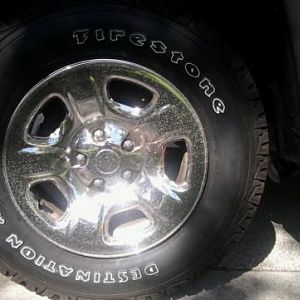
Tires are about 50% of the noise. They are Duratracs. There was always a fair amount of road/wind (mostly road)noise, tires made it worse and no I'm not changing tires. They are a good all around tire for winter conditions (they stopped my vehicle in a freezing rain storm out near hope when I semi decided to last second hit the brakes to pull into the scale narrowly avoiding the back of the trailer, with about 10m to spare.) which I like to drive and the forest service roads that I also like to go down. Downside is they can be noisy on some vehicles. I've had them on about 4 other vehicles and this one is the noisiest and I think in the grand scheme of things it also happens to be the most entry level of the vehicles I've run them on. I think the other vehicles being higher in price when new simply had more sound proofing.
 
Last edited:

seafish

Full Access Member
Joined
Jan 10, 2024
Messages
583
Reaction score
757
Tires are about 50% of the noise. They are Duratracs. There was always a fair amount of road/wind (mostly road)noise, tires made it worse and no I'm not changing tires.

Those Duratrac look like nice tires. My KJ, Giddyup, wears Michelin LTX Defenders AT.
I have used the various iterations of Michelin Defenders on her and several other vehicles for years now.

I also run ALOT of gravel roads as a matter of course and they have never let me down, even though their tread pattern is nowhere near as aggressive as those Duratracs…in fact its hard to tell that they are rated as an AT simply by looking at the tread. That said, they are a tough and durable tire that has solid traction in both wet and dry conditions on both the gravel and very cr*ppy county roads that I daily travel. They are also fairly quiet and I will continue to use them simply because while I do NOT do any serious off roading.

Some insight and methodology of car sound deadening coming up tomorrow.
 

CheddarGau

Full Access Member
Joined
Oct 10, 2023
Messages
385
Reaction score
423
Location
Lower Mainland BC
Those Duratrac look like nice tires. My KJ, Giddyup, wears Michelin LTX Defenders AT.
I have used the various iterations of Michelin Defenders on her and several other vehicles for years now.

I also run ALOT of gravel roads as a matter of course and they have never let me down, even though their tread pattern is nowhere near as aggressive as those Duratracs…in fact its hard to tell that they are rated as an AT simply by looking at the tread. That said, they are a tough and durable tire that has solid traction in both wet and dry conditions on both the gravel and very cr*ppy county roads that I daily travel. They are also fairly quiet and I will continue to use them simply because while I do NOT do any serious off roading.

Some insight and methodology of car sound deadening coming up tomorrow.
Defenders while under their AT line, are what we call a highway tire. Defenders are a good tire. We put a fair number of them on commercial vehicles.
 

seafish

Full Access Member
Joined
Jan 10, 2024
Messages
583
Reaction score
757
Broadly speaking, noise reduction as it applies to the inside of a vehicle, falls into THREE literal layers —

1) Reducing flat panel resonance … using CLD (Constrained Layer Dampers) which is a self adhesive, peel n stick product, made from a layer of butyl rubber laminated to a layer of aluminum. Think of products like Dynamat. CLD reduces panel vibration essentially by converting any sound waves that hit the panel into heat.

It is important to note that all CLD products are NOT equal and some are more effective then others at lowering panel resonance. Even though higher end products will cost more initially, you can actually use LESS of them, which can offset the cost both in terms of amount of material used and the labor and time to install it. Also, importantly, higher end CLD products will have NO smell or melting at the high internal temperatures that any vehicle can attain in some parts of the country.

There is an entire FB group called "the Deadening" that tests and compares different CLD products in a scientifically rigorous manner. IF you do FB, it might be wise to look at their "master list" of CLD products tested. BOTH Dynamat Extreme and Amazon Basics CLD make the top ten, but the clear winner is also the most expensive, a CLD distributed by Resonix. Resonix is also an excellent source for ALL high end deadening products as well as some high end SQ equipment, though they ARE expensive products.

FULL disclosure, I have used some Resonix products, as well as those from other manufacturers, and have NOTHING to gain from your decision to do so or not!!!

IMPORTANT NOTE: Do NOT try to save money by using asphalt/bitumen based construction products in place of a bonafide CLD…you will come to regret the decision. Even if your doors pass the "knock" test, asphalt backed aluminum flashing products are nowhere near as effective at reducing panel resonance as butyl rubber based products are. They also have a substantially increased chance of mechanical/adhesive failure due to heat…in other words, the MESS and SMELL that they make in your car when they fail will have you swearing for ignoring this warning. :p

One should apply CLD materials to the approximate center of any flat or unsupported panels at approximately 50% coverage. Note that while I am saying "flat" panels, what I really mean is any panels (flat or curved) that have no braces, ridges or extrusions to reinforce them. For maximum effect, one can also apply it to the center/open area of any panels that are reinforced, but this is less necessary to do, as the more rigid panels are already less prone to vibration. Other then OCD, there is ZERO rasion to apply CLD OVER bracing or other panel stiffening extrusions. ALSO note that while you can apply CLD at up to 100% coverage, it is not actually necessary … what you are trying to do is to reduce audible resonances from the panel vibrating with acoustic energy and 50% coverage with a QUALITY product is enough to do that effectively.

Applying CLD involves accessing the bare, painted metal by completely removing plastic door interior and/or vanity panels and/or also floor carpet in order to access the areas that you want to treat. You also need to make sure that the metal is clean enough for the butyl rubber "peel n stick" to adhere to. Once the panels are accessible and clean, the cutting and installation of peel n stick CLD is relatively a easy breeze using scissors and a roller. That said a wooden or smooth steel roller is absolutely crucial to properly apply the CLD. Resonix, at least used to, include a very good roller with a minimum purchase of their CLD tiles.

At this point, it is also a good idea to seal any large, medium or even small medium sized "access holes" within the inside door skin. For this, it is simplest to cut and use a piece of 1/8" thick ABS plastic slightly larger then the hole you are covering, but also with a piece of CLD stuck to one side of it, to stiffen it. Then cut the correct length of butyl rubber "rope" to stick the newly made plastic panel to the OEM door panel. Smaller holes can simply be sealed with a piece of CLD slapped over them.

Sealing these openings will add potential volume and clarity to the listening space of the cabin as it will prevent any sound waves emanating from the BACK of the door mounted speaker from entering the cabin and causing interference and cancellation of the actual sound waves that you want to hear from the front of the speaker. That said, the butyl rubber rope will also allow you to easily remove the newly made panels for future interior door access and service. Note that butyl rubber rope can also used to press into the spaces between OEM panel braces and the panel itself to also help deaden the panel.:cool:

2) Blocking Noise

This is a HUGELY important, and the most labor intensive part, of quieting the interior of a vehicle.
The goal here is to actually BLOCK outside noise from infiltrating to the the inside of the cabin, degrading the listening environment and competing with the sound from your speakers that you WANT to hear.

The DENSITY of the material you use here is of utmost importance. as well as partially the quality of the CCF that you use in between the CLD and the MLV.

Some people (myself included) opt to use thin (1/32") foam encapsulated LEAD sheeting that weighs 2#/sf. That said, the majority use easier to obtain and MUCH less expensive MLV (mass loaded vinyl) that weighs approx. 1#/sf and is slightly over 1/8" thick. The MLV is obviously less toxic to use, and also easier to install on vertical services using indistrial grade 3M adhesive velcro strips. The velcro allows easy installation, as well as easy removal for eventual later access to the door components. That said, it is harder to get the thicker MLV material to conform to things like transmission humps and floor pans where the seats mount, which is where the sheet lead, shines in ease of application. You DEFINITELY want to use the virgin vinyl variety of MLV as it does not make your care smell "plasticky" like the recycled versions will.

Another step on blocking noise, is to use 1/8" thick CCF (closed cell foam…think yoga mats) to isolate the MLV from the vehicle underneath. The CCF layer keeps noise or vibrations from penetrating or vibrating the the MLV itself and it is extemely effective in quieting the vehicle, though it is important to note that it us the MLV (or lead) sheeting that is doing the heavy lifting by simply blocking sound waves due to its density.

There are high end dual laminated products, again available from Resonix, that incorporate the foam and MLV (or even sheet lead)in a single product, saving installation time, but you end up paying MUCH more for the materials, and it is no more effective then separate layers of CCF and MLV.

The MOST important thing to realize about sound blocking is that 100% coverage , or as close to that as you can reasonably achieve) is CRUCIAL in order to BLOCK the sound waves (road noise, wind noise, tire noise) since sound waves travels omni directionally and will find and infiltrate anywhere they can.

TLTR — Think about the difference in volume of someone shouting at you from outside the house with the window open vs closed … just the thin pane of glass makes a huge difference.

Seams between pieces of adjoining MLV can be lapped over each other by a couple inches, or they can be butt fitted and then another 2 or 3" strip of MLV can be used on top of the seam to join them using Vinyl Glue.


Also important to note, MLV and CCF are water proof and with the right adhesives, can be applied to the back of wheel well liners in order to try to quiet down tire noise.


3) Reducing Rattles … caused by cheap OEM construction, or too much bass, or BOTH.

This is typically done by SQ purists or those installing multiple subwoofers whose high output, low frequencies can make any panel rattle or any windshield bulge, and ALL loose door or dash hardware rattle. Treatment can be as simple as wrapping the door latch hardware in Tessa tape or adding some CCF behind your license plates. It is pretty much done on an as needed basis and peel in stick CCF, butyl rubber rope, tessa tape and also 3M acoustic Thinsulate, are all your friends here.

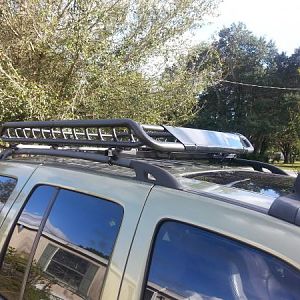
The 3M Thinsulate is also useful for stuffing follow cavities, think A pillars, as well as placing a sheet between the headliner and roof to quiet wind noise from the roof. This is especially useful if you have a roof rack on your vehicle.

The commonality between all these steps is LABOR and material quality selected … It takes time and dedication to cut and apply the materials in a way to properly achieve your SQ goals and make the $$$ spent on materials and equipment worth it.

Just my .02

 
Last edited:

CheddarGau

Full Access Member
Joined
Oct 10, 2023
Messages
385
Reaction score
423
Location
Lower Mainland BC
Broadly speaking, noise reduction in a vehicle falls into literally THREE layers.

1) Reducing flat panel resonance with CLD (Constrained Layer Dampers) made from a combination of butyl rubber and aluminum. Think products Dynamat Extreme or other products like it. These reduce panel vibration essentially by turning sound waves into heat.

It is CRUCIAL to note that some CLD products are MUCH more effective then others at lowering panel resonance, and even though they may cost more initially, you actually can use LESS of them, thus offsetting cost in terms of material bought and time to install. Also, importantly, the higher end products will have NO bad smell or even melting at the sometimes high internal vehicle temperatures.

One should apply these CLD materials to the center of flat or unsupported panels at approximately 50% coverage. Note that I am saying "flat" panels, but what I really mean is any panels (flat or curved) that have no braces, ridges or extrusions and also, for maximum effect, to the center/open area of any panels that are reinforced. While you CAN apply CLD at up to 100% coverage, it is not necessary as what you are trying to do is to reduce resonance from the panel vibrating with acoustic energy and 50% coverage is enough to do that effectively.

Applying CLD involves accessing the bare, painted metal by completely removing plastic door interior and.ir vanity panels and/or also floor carpet in order to access the areas that you want to treat. Then you need to sure that the metal is clean enough for the butyl rubber "peel n stick" to adhere to. Once the panels are accessible and clean, cutting and insatllation of the peel n stick CLD is relatively a easy breeze.

At this point, it is also possible to seal any large or even medium size panel access holes, like in the inside door skin. For this it is easiest to cut and use a piece of 1/8" thick ABS plastic slightly larger then the hole you are covering, but also with a piece of CLD stuck to one side of it. Then simply use a length of butyl rubber "rope" to stick the newly made plastic panel to the OEM door panel. Smaller holes can simply be sealed with a piece of CLD. Sealing these holes will also add volume to the cabin from your door mounted speakers as it will help prevent any sound waves emanating from the back of the speaker from entering the cabin and causing interference and cancellation of the actual sound waves that you want to hear from the front of the speaker. That said, the butyl rubber rope will also allow you to easily remove the panels for future interior door access. :cool:

2) Blocking Noise

This is a HUGELY important part of "deadening" the interior of a vehicle and its goal is to BLOCK outside noise from infiltrating to the the inside of the cabin, degrading the listening environment and competing with the sound from your speakers that you WANT to hear.

The DENSITY of the material you use is of utmost importance her.

Some people (myself included) opt to use thin (1/32") foam encapsulated LEAD sheeting that weighs 2#/sf. That said, the majority use easier to obtain and less expensive MLV (mass loaded vinyl) that weighs approx. 1#/sf and is slightly over 1/8" thick. The MLV is obviously less toxic to use, and also easier to install on vertical services. That said, it is harder to get the thicker material to conform to things like transmission humps and floor pans where the seats mount, which is where the sheet lead, while more expoesive, shines in ease of application. You DEFINITELY want to use the virgin vinyl variety of MLV as it does not make your care smell "plasticky" like the recycled versions will.

Another step on blocking noise, is to use 1/8" thick CCF (closed cell foam…think yoga mats) to isolate the MLV from the vehicle underneath. The CCF layer keeps noise or vibrations from penetrating or vibrating the the MLV itself and it is extemely effective in quieting the vehicle, though it is important to note that it us the MLV (or lead) sheeting that is doing the heavy lifting by simply blocking sound waves due to its density.

There are high end dual laminated products, again available from Resonix, that incorporate the foam and MLV (or even sheet lead)in a single product, saving installation time, but you end up paying MUCH more for the materials, and it is no more effective then separate layers of CCF and MLV.

The MOST important thing to realize about sound blocking is that 100% coverage , or as close to that as you can reasonably achieve) is CRUCIAL in order to BLOCK the sound waves (road noise, wind noise, tire noise) since sound waves travels omni directionally and will find and infiltrate anywhere they can.

TLTR — Think about the difference in volume of someone shouting at you from outside the house with the window open vs closed … just the thin pane of glass makes a huge difference.

Seams between pieces of adjoining MLV can be lapped over each other by a couple inches, or they can be butt fitted and then another 2 or 3" strip of MLV can be used on top of the seam to join them using Vinyl Glue.


Also important to note, MLV and CCF are water proof and with the right adhesives, can be applied to the back of wheel well liners in order to try to quiet down tire noise.


3) Reducing Rattles … caused by cheap OEM construction or too much bass or BOTH.

This is typically done by purists, or those installing bumping subwoofers whose high output, low frequencies can make ANY panel rattle or windshield bulge, as well as ANY loose door hardware rattle. Treatment can be as simple as wrapping the door latch hardware in Tessa tape or adding some CCF behind your license plates. It is pretty much done on an as needed basis and peel in stick CCF, butyl rubber rope, tessa tape and also 3M acoustic Thinsulate, are all your friends here.

The 3M Thinsulate is also useful for stuffing follow cavities, think A pillars, as well as placing a sheet between the headliner and roof to quiet wind noise from the roof. This is especially useful if you have a roof rack on your vehicle.

The commonality between all the steps is LABOR and material quality selected … It takes time and dedication to cut and apply the materials in a way to properly achieve your SQ goals and make the $$$ spent on materials and equipment worth it.

Just my .02

This is a great write up and definitely some great take aways from it. A lot of it makes sense, but important to read.
 

profdlp

Circling The Drain
Joined
May 21, 2013
Messages
5,889
Reaction score
1,937
Location
Westlake, Ohio
It has been quite a few years now, but as I recall, changing out the speakers was easy. If you are still open to that idea I will try and resurrect the details from my cobweb-ridden mind.

And I have been wanting to do some sound dampening for years. Who know - maybe someday I will.
 

mercdudecbr600

Full Access Member
Joined
Oct 3, 2018
Messages
484
Reaction score
176
I would suspect your aftermarket head unit blew out your stock speakers. They are relatively easy to get at and replace, however.
Noisy mechanical elements like exhaust and tires will easily drown-out your sound system on the KJ, for sure. If you want good sound, start with quiet tires and stock exhaust. Then you can start to worry about getting properly amplified aftermarket speakers and a head unit to match.

For super serious sound folks getting nuts on insulation but the KJ is just not a good vehicle to upgrade sound system IMO.

Even my limited (infinity system) with good noise cancelling insultation placed behind the speakers on quiet tires and OEM exhaust pails in comparison to my base level system (8 speaker) in my 2013 VW. The design and placement of the speakers in the KJ seems like an afterthought as compared to newer vehicles and that limits your experience.
 

Latest posts

Members online

Top